At a glance
- De-icing salt leaves a white film and damages floors: remove it quickly and often.
- Entrance mats catch much of the salt before it comes in.
- A suitable cleaner and a rinse prevent slippery residue.
Why does salt leave white marks on the floor?
De-icing salt is carried in on shoes. As it dries it leaves a white film of crystals. Over time it dulls the finish and can damage some floors. The longer it stays, the harder it is to remove.
How do you protect a commercial floor from salt?
- 01Place large entrance mats, inside and outside, and change them as soon as they are saturated.
- 02Sweep or dust-mop the entrance several times a day during freezing periods.
- 03Wash with a cleaner suited to the floor type, at the recommended dilution.
- 04Rinse with clean water to remove salt and product residue.
- 05Let it dry and mark wet areas to prevent slips.
Which product should you use on a salted floor?
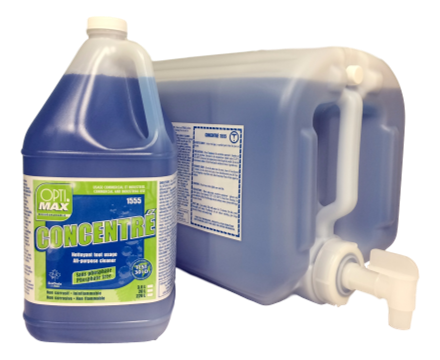
Use a floor cleaner compatible with your covering (tile, vinyl, sealed concrete), pH-neutral or per the technical sheet. A well-diluted concentrated floor cleaner cleans without leaving a sticky film that holds dirt.
| Covering | Watch point | Advice |
|---|---|---|
| Tile | Grout retains salt | Rinse thoroughly, brush grout lines |
| Vinyl (VCT) | Finish dulled by salt | Gentle cleaner, avoid overdosing |
| Sealed concrete | Sealer worn by salt | Maintain and reseal as needed |
Tip
A well-equipped entrance costs less than repairing a floor. Mats are the first line of defence against salt.
Frequently asked questions
How do you remove white salt marks?+
Mop with a floor cleaner diluted as labelled, then rinse with clean water. Repeat as needed without letting salt dry again.
Can you use vinegar?+
It dissolves salt, but it can dull some coverings. Check compatibility with your floor manufacturer first.
How often should you wash in winter?+
Entrance areas several times a day during freezing periods; the rest of the floor depending on traffic.
Related products
Optimax Products
Optimax, manufacturer in Québec City since 1991: 782 Godin Ave., Québec.